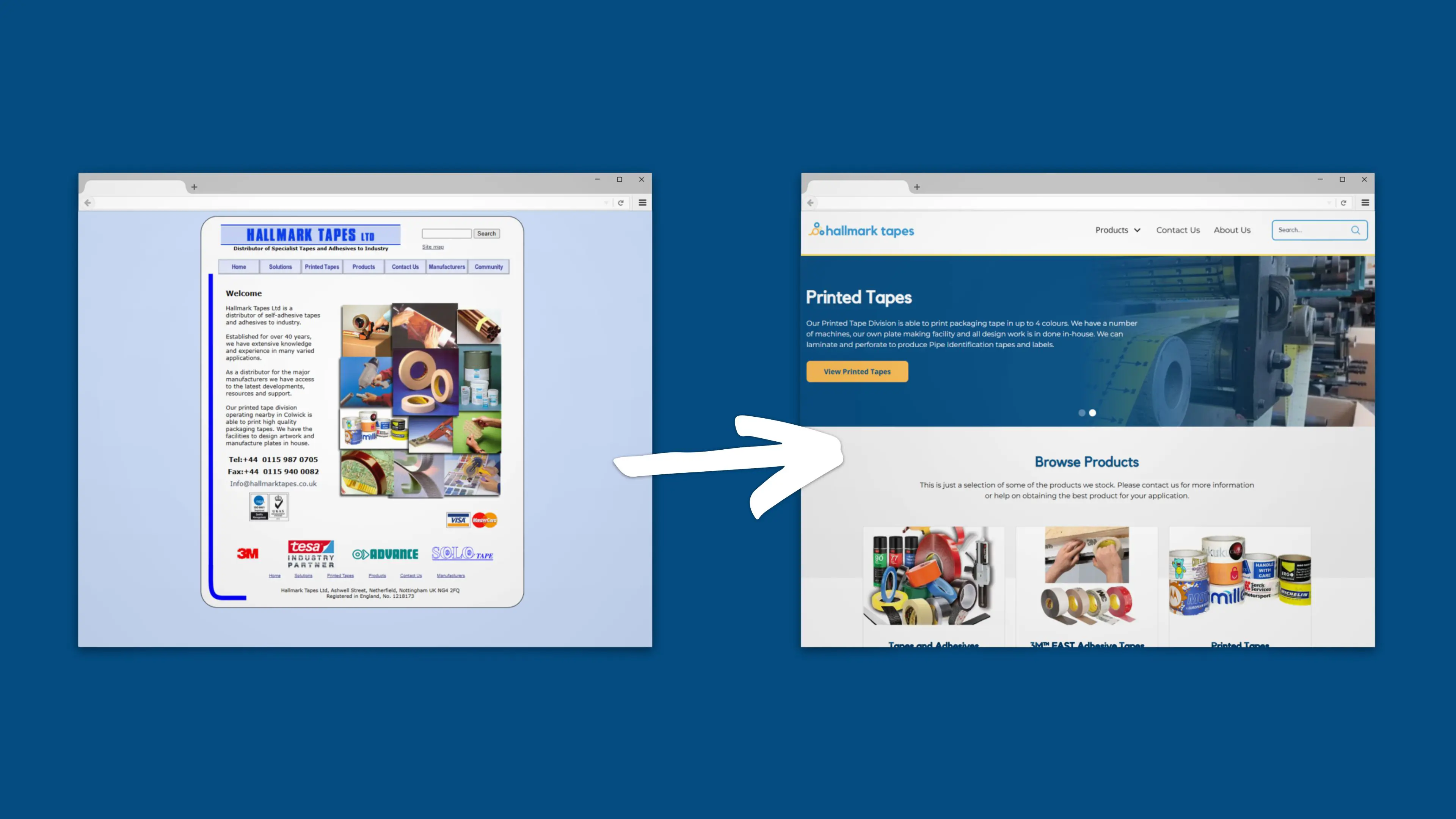
Hallmark Tapes is a leading supplier of adhesive tape products to businesses across the UK. The company had built a strong reputation in its market, but its digital platform was not keeping pace with the business.
The website was running on an outdated legacy CMS that had become expensive to maintain and difficult for anyone outside the development team to update. Routine content changes - updating a product listing, adding a news item, changing a phone number - required a developer. That meant delays, unnecessary costs, and a marketing team that spent more time raising support tickets than producing content.
There were deeper problems too. The platform had known security vulnerabilities, compatibility issues with modern tools, and performance that was visibly sluggish. For a business that depends on its website to serve trade customers, that was a growing risk.
The leadership team knew the platform needed replacing. The question was how to do it without disrupting a site that was still generating business every day.
"The old platform was costing us time and money every week. Content changes that should have taken minutes were taking days because everything went through a developer. Since moving to the new CMS, our marketing team publishes independently, the site is faster, and our costs have dropped significantly. We should have done this two years ago."
We started with an assessment of the existing setup - content models, site architecture, performance data, and the specific pain points the team was dealing with day to day.
The findings confirmed what the business suspected: the legacy CMS was the root cause. It was costly, inflexible, and creating a bottleneck between the business and its customers. But the assessment also revealed something useful - the site’s content and structure were fundamentally sound. This was not a case that required a complete rethink of the business’s digital presence. It was a platform problem, and it needed a platform solution.
We recommended a migration to Payload CMS with a modern composable architecture. Payload was selected for three reasons: its API-first design gave the development team the flexibility they needed, its content management interface was intuitive enough for non-technical users, and its self-hosted model gave Hallmark full control over their own infrastructure.
The migration covered the full site - content, assets, product information, and integrations. We rebuilt the content models to take advantage of Payload’s more flexible architecture and designed structured templates that allowed the marketing team to create and publish content without any developer involvement. The frontend was rebuilt for speed, with a modern stack that addressed the performance issues the old platform had created.
The cutover was planned carefully. Content was synced, the switch happened during a low-traffic window, and the team monitored closely throughout. There was no downtime and no disruption to customers.
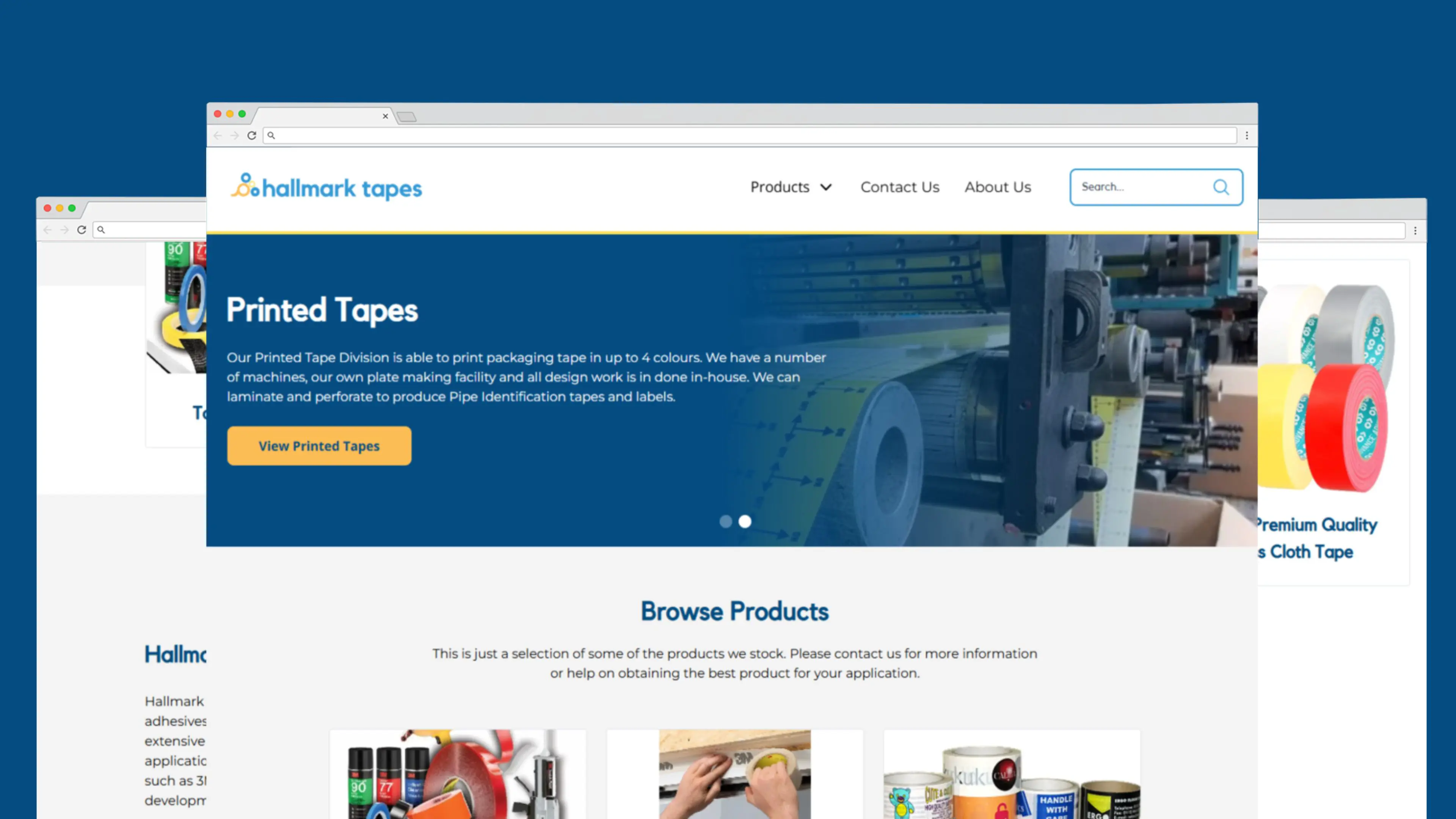
To overcome these limitations, we recommended a re-platforming strategy centred around a composable architecture using Payload CMS.
This approach decoupled content management from frontend development, enabling greater flexibility and faster deployments.
Payload CMS was selected for its API-first design, intuitive content management, and seamless integration with modern tools.
We restructured the website’s architecture, allowing Hallmark Tapes to maintain complete control over their digital ecosystem while minimizing reliance on external developers

The impact was immediate and measurable. CMS operating costs dropped by roughly 80%, replacing the expensive legacy platform with manageable, predictable infrastructure spend. Page speed improved by 23%, giving trade customers a noticeably faster experience.
The biggest change was operational. Content publishing went from a process that took days - raise a ticket, wait for a developer, review, publish - to something the marketing team could do themselves in minutes. That shift freed up developer time for higher-value work and gave the business the ability to respond to market opportunities without a queue.
The new platform also resolved the security and compatibility concerns that had been accumulating under the old system. Hallmark now has a modern, self-hosted infrastructure that they fully control, with the flexibility to add features and integrations as the business grows