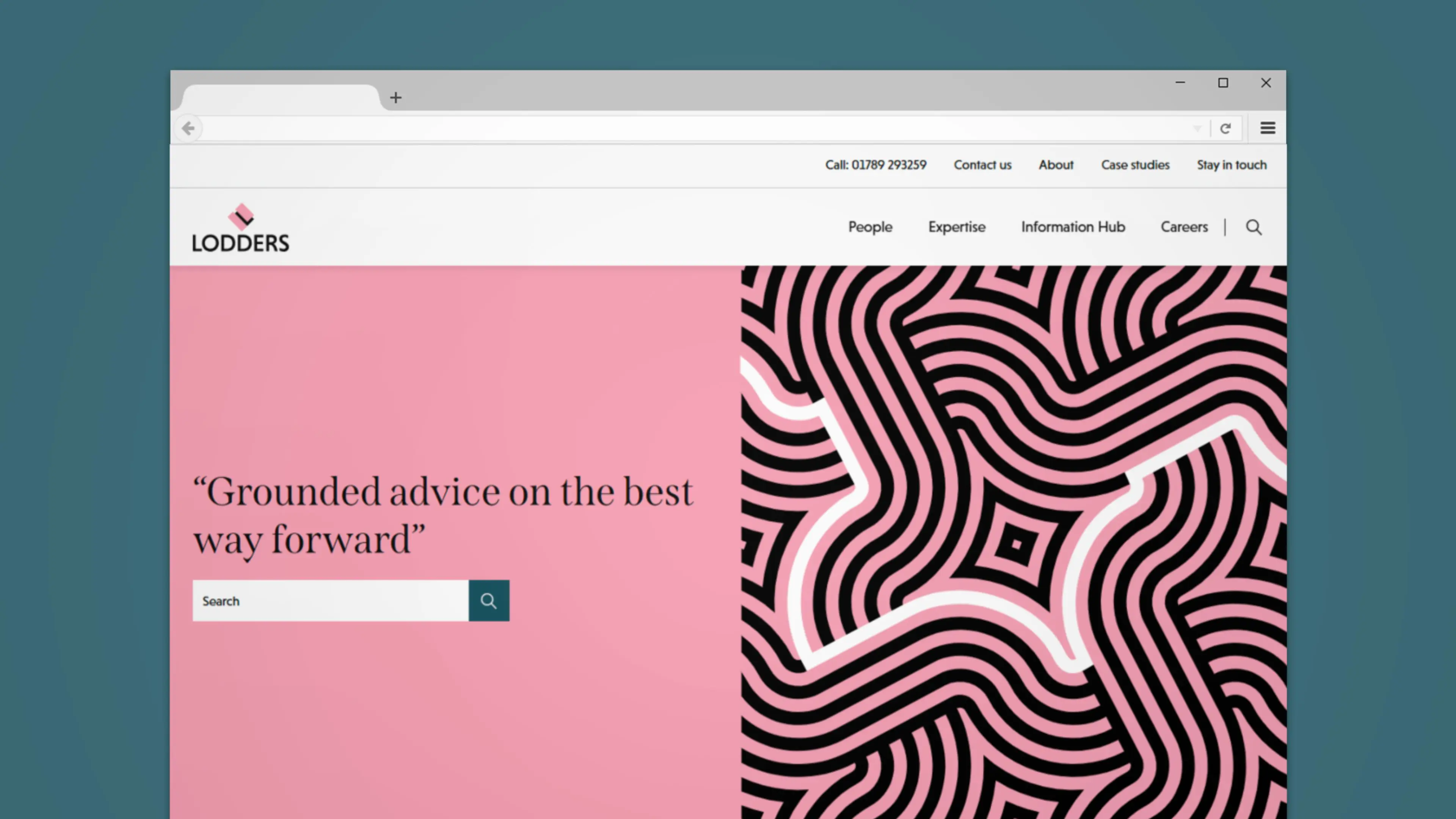
Lodders Solicitors has been providing legal services for over 240 years. With more than 100 legal professionals across multiple offices, the firm had built a strong reputation in private client, agriculture, and commercial work. But their digital presence was not keeping pace.
The website was over five years old, built on a heavily customised WordPress installation that had become difficult for anyone outside IT to update. Service pages were inconsistent, lawyer profiles varied in quality from one practice area to another, and the site had no structured way to convert a visitor into an enquiry. Marketing spent more time requesting developer support for basic content changes than actually producing content.
There was a deeper issue too. Lodders had evolved significantly as a firm - expanding its commercial offering and attracting a new generation of partners - but the brand and website still reflected an older identity. The firm’s Head of Marketing was hearing a familiar complaint from partners: prospective clients were telling them the website did not reflect the quality of the advice they received.
In a sector where trust is built before the first conversation, that gap was costing them work.
"The old website was holding us back. Clients told us it did not reflect who we are now. Since the rebrand and rebuild, the site is generating more enquiries than we expected, and our marketing team can actually manage it without chasing developers for every update. That was long overdue."
We started with a 14-day assessment. Two senior consultants reviewed the existing platform, interviewed stakeholders across marketing, IT, and the partnership, and analysed traffic and conversion data to understand where the site was failing.
The findings were clear. The site was receiving strong traffic - over 18,000 visits per month - driven by the firm’s domain authority and brand recognition in its core markets. But it was doing almost nothing with that traffic. Less than 2% of visits resulted in any form of enquiry. Navigation was structured around internal practice areas rather than the problems clients were trying to solve. And the brand - from visual identity to tone of voice - no longer represented the firm Lodders had become.
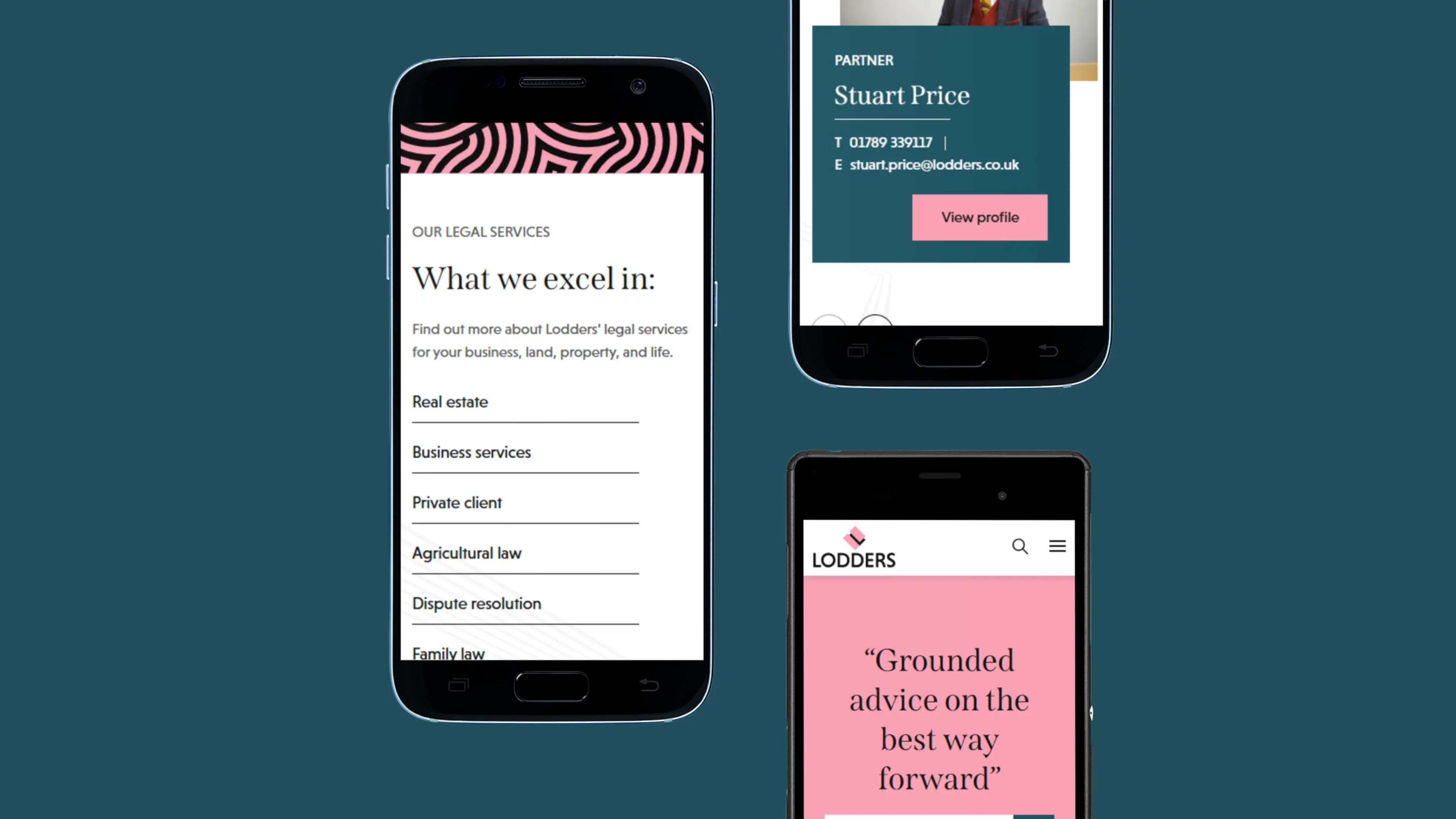
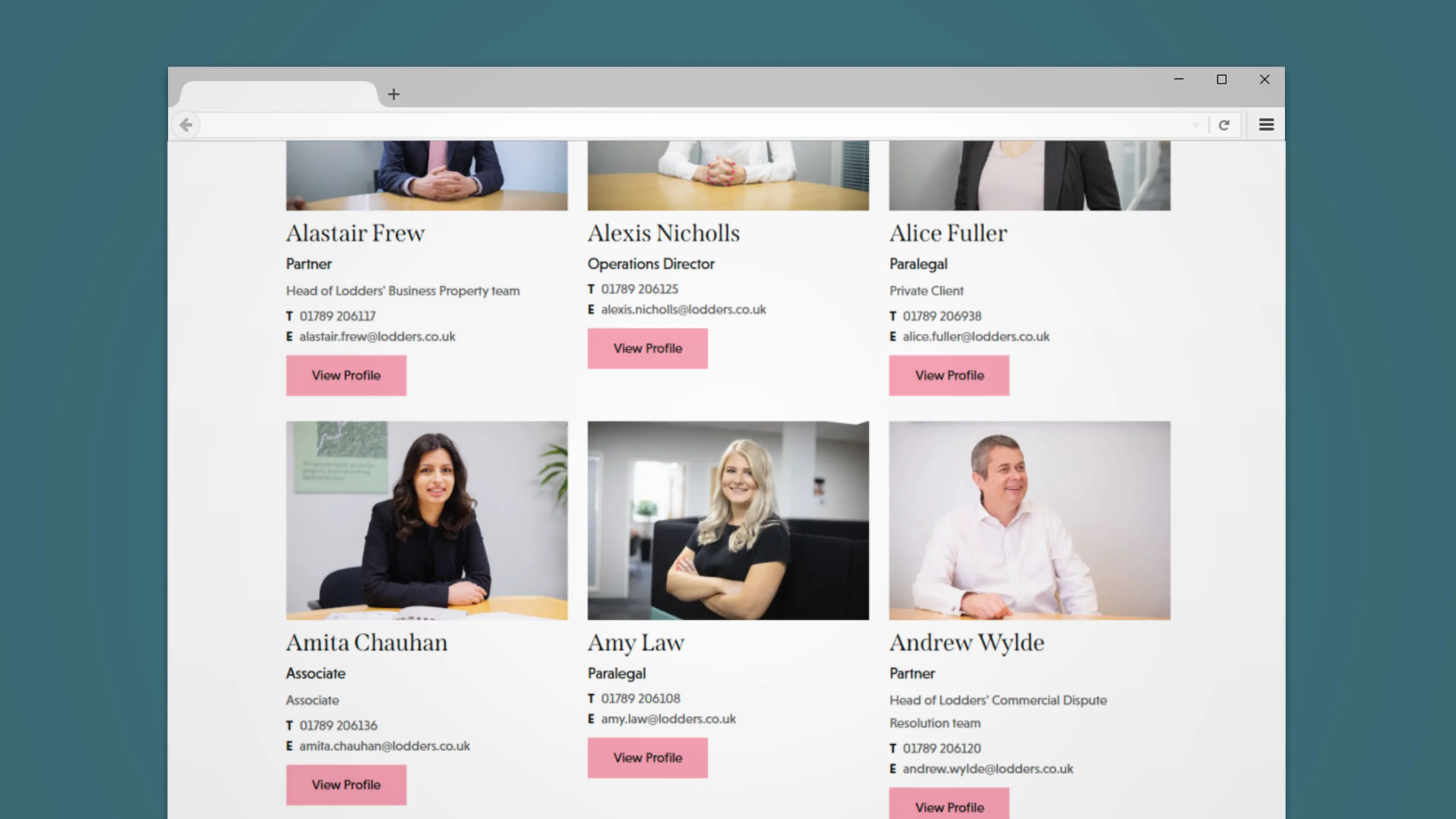
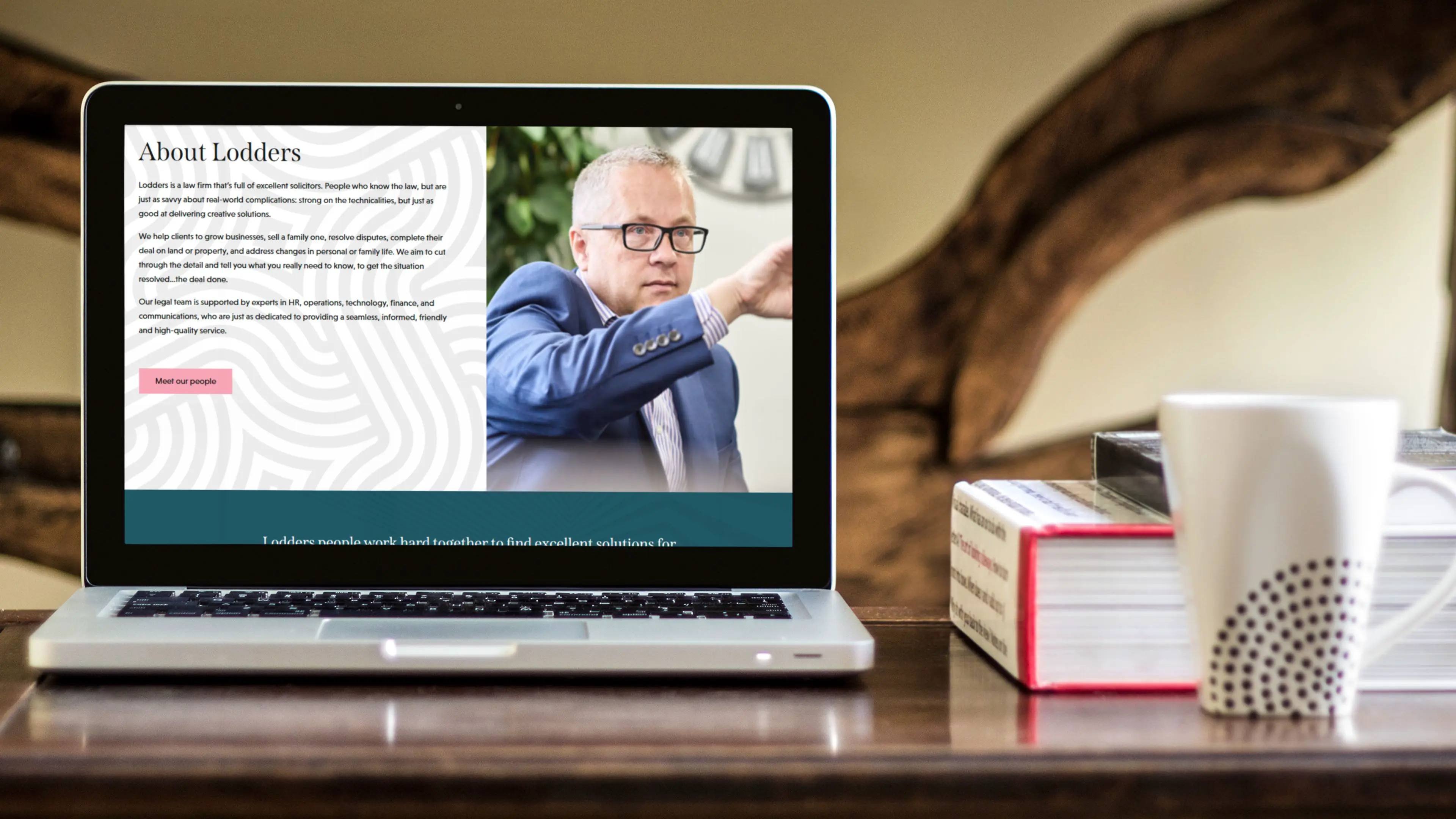
The project was delivered in two sprints. The first sprint focused on brand and platform fundamentals: a refreshed visual identity that respected the firm’s heritage while reflecting its ambition, a restructured site architecture organised around client needs, and proper enquiry paths with context-specific calls to action on every service page. We also rebuilt the lawyer profiles into a consistent, searchable format that highlighted each individual’s specialisms and sector experience.
The second sprint addressed content and editorial independence. We migrated the site to a WordPress build that gave the marketing team full control - structured templates for service pages, practice updates, and thought leadership, with no developer involvement needed for day-to-day publishing. We also implemented a content strategy that connected the firm’s sector expertise to the questions prospective clients were actually searching for.
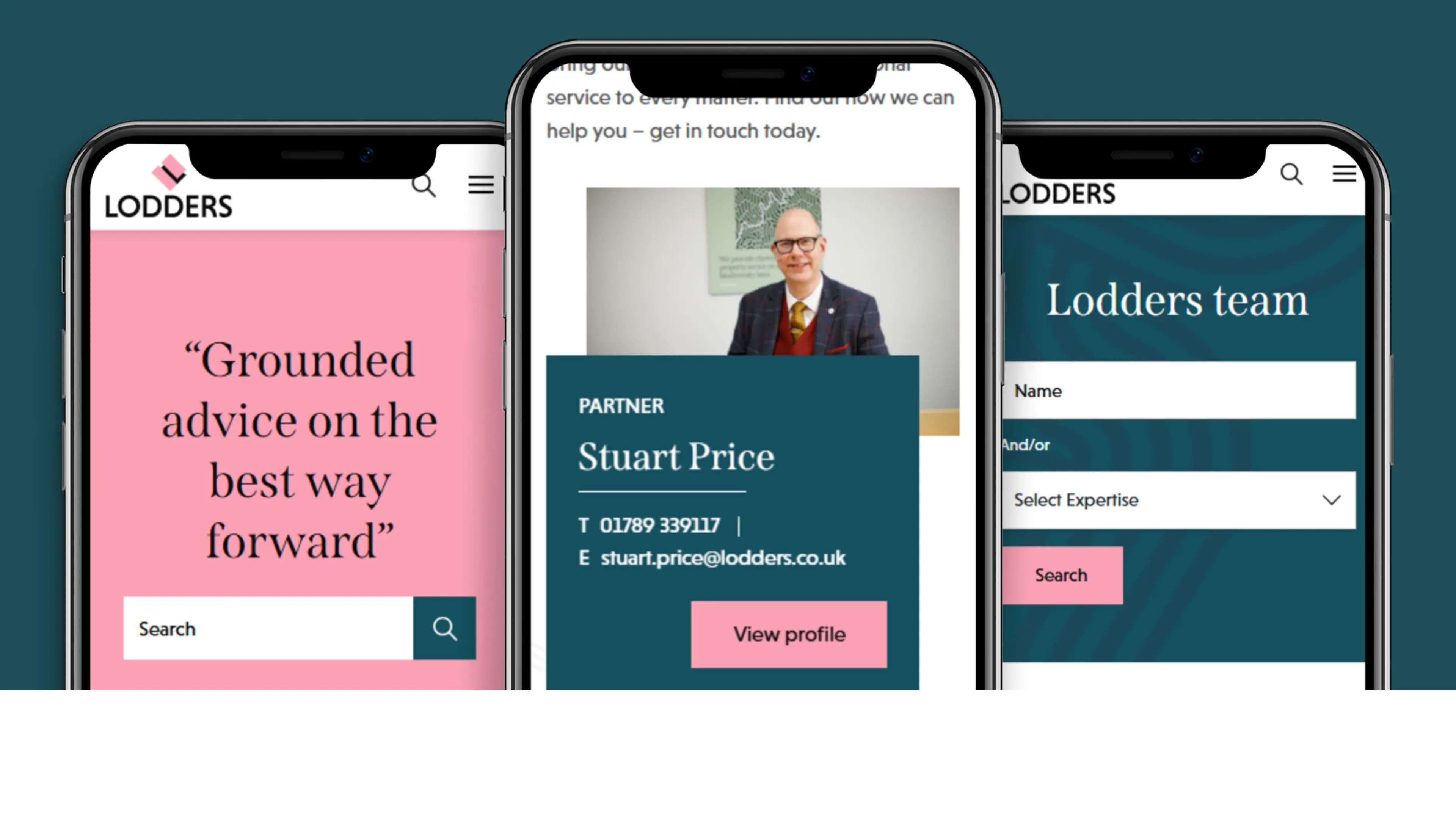
Within six months of launch, website enquiries increased by 58%. Bounce rate dropped by 34%, driven by clearer navigation and service pages that spoke to client problems rather than internal structures. The marketing team went from a two-week publishing cycle - dependent on developer availability - to same-day turnaround for content updates.
The operational shift was as significant as the numbers. Before the rebuild, marketing had to submit a ticket and wait for a developer to make any change to the site, no matter how small. Within a month of launch, the team was independently publishing practice updates, case highlights, and event listings without involving IT. That freed up roughly eight hours per week of developer time that had been spent on routine content requests.
Partners reported that the new site was changing conversations with prospective clients. Two partners specifically noted that clients had mentioned the website positively during initial meetings - something that had not happened with the previous site.